
Roman Sestertius Coins: The Bronze Giants of the Empire
Meta Title:
Meta Description: Explore the history, size, and value of the Roman sestertius — the massive bronze coin that carried the empire’s art and propaganda. Learn how to identify and collect authentic sestertii.
Introduction – When Bronze Spoke Like Gold
If the denarius was Rome’s silver heartbeat and the aureus its golden crown, the sestertius was its mighty bronze voice.
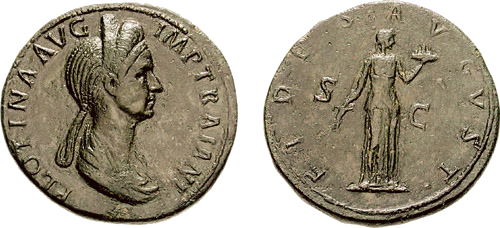
Struck larger than any other Roman coin, the Roman sestertius coin was a canvas for imperial messages — portraits, triumphs, and deities rendered in stunning detail.
For nearly four centuries, these bronze giants told the story of empire to the masses.
Today, collectors treasure the sestertius not only for its size and artistry but also for the way it connects us to everyday life in ancient Rome — where bronze, not gold, ruled the marketplace.
⚖️ Origins of the Roman Sestertius
The word sestertius comes from semis tertius, meaning “two and a half” — the coin’s original value in asses (2½ asses).
In the early Republic, this was a small silver denomination, but during the reign of Augustus (27 BC), it became a large bronze (orichalcum) coin.
| Specification | Details |
|---|---|
| Metal | Orichalcum (brass alloy of copper & zinc) |
| Diameter | 30–35 mm |
| Weight | 22–28 g |
| Value | ¼ of a denarius |
| Era of Use | 27 BC – late 3rd century AD |
💬 The sestertius was Rome’s billboard — a coin so large it could tell stories in metal.
🏛️ The Sestertius in the Imperial Era
Augustus to Nero (27 BC – AD 68)
-
Introduced as a high-value bronze coin.
-
Used for major transactions and savings.
-
Features of Augustus, Tiberius, and Claudius show refined early portraiture.
Flavian & Antonine Periods (AD 69 – 192)
-
The artistic golden age of the sestertius.
-
Under Trajan, Hadrian, and Marcus Aurelius, the coin became miniature sculpture.
-
Scenes of architecture (aqueducts, temples) and virtues (Aequitas, Spes, Pax).
Severan & Crisis Period (AD 193 – 260)
-
Coinage quality declines; weight and metal purity reduce.
-
Yet sestertii remain essential for large public payments and propaganda.
🪙 A sestertius was worth enough to buy several days’ worth of bread — the true measure of Roman economy.
🧩 Design & Symbolism – Empire in Relief
The Roman sestertius offered engravers ample space for detail rarely seen on smaller coins.
| Side | Imagery | Meaning |
|---|---|---|
| Obverse | Emperor or Empress portrait | The “face” of imperial authority |
| Reverse | Deities, monuments, or conquests | Public achievements and virtues |
| Legend | Titles, dates, and honors | Political legitimacy in Latin |
Common Reverse Themes:
-
PAX AVG – Peace of the Emperor
-
ROMA AETERNA – Eternal Rome
-
ADVENTVS AVGVSTI – Emperor’s ceremonial arrival
-
S C – “Senatus Consulto,” meaning “by decree of the Senate”
💬 The “S C” mark reminded citizens that even the emperor bowed to the Senate — at least in theory.
💰 Roman Sestertius Value (2025 Collector Market Overview)
| Type | Emperor | Condition | Price Range (USD) | Highlights |
|---|---|---|---|---|
| Augustus / Tiberius | Early Empire | Fine | $300 – $800 | Transitional silver-bronze issues |
| Nero | AD 54–68 | VF – XF | $700 – $1 500 | Lavish portraits & artistry |
| Trajan / Hadrian | AD 98–138 | VF – XF | $900 – $2 500 | Highly sought for reverses |
| Marcus Aurelius | AD 161–180 | VF | $600 – $1 200 | Stoic emperor depictions |
| Commodus / Septimius Severus | AD 180–210 | F – VF | $350 – $800 | Common, educational |
| Crisis / Gallienus | AD 250s | F | $100 – $300 | Late bronze, often porous |
| Special Architectural Reverses | Hadrian / Trajan | VF | $2 000+ | Temples, aqueducts, harbor scenes |
📈 High-grade sestertii with strong portraits have surged 40 % in auction prices since 2020.
🔍 How to Identify an Authentic Sestertius
-
Size & Weight: True sestertii are large (30–35 mm) and heavy (22–28 g).
-
Metal: Orichalcum shows warm golden-brown tone, unlike reddish copper.
-
Patina: Look for natural olive, green, or brown patina — not artificial shine.
-
Legends: Should include “S C” on the reverse (standard Senate mark).
-
Strike Quality: Ancient coins show centered portraits but hand-struck variations.
🧠 Beware of cast fakes — they often have bubbly surfaces and soft detail.
🏦 Buying Roman Sestertius Coins
Authentic Roman sestertii for sale can be found at reputable sources such as:
-
CNG – Classical Numismatic Group – Museum-grade bronze.
-
Leu Numismatik – Swiss auction specialists.
-
VCoins Marketplace – Verified global dealers.
-
MA-Shops – European coins with return policies.
-
NumisDon Marketplace – Educational and collector-focused listings.
⚠️ Avoid “cleaned” coins on eBay — natural patina adds both authenticity and value.
🪙 Famous Sestertii in History
| Emperor | Reverse | Symbolism | Auction Value |
|---|---|---|---|
| Nero | Temple of Janus closed | Peace after victory | $8 000+ |
| Trajan | Harbor of Ostia | Trade expansion | $12 000+ |
| Hadrian | Roma seated | Eternal strength | $6 000 |
| Marcus Aurelius | Victory advancing | Military discipline | $4 000 |
| Commodus | Hercules | Divine self-image | $3 500 |
🏛️ The Hadrian “Roma Aeterna” sestertius is often called the most beautiful Roman coin ever struck.
🧠 Why Collectors Love the Sestertius
-
Massive presence: Twice the size of most coins — feels like holding history.
-
Historical scenes: Best medium for imperial architecture and art.
-
Affordable entry point: Bronze coins accessible to all collectors.
-
Educational value: Perfect for understanding Roman society and economy.
💬 The sestertius connects you not to emperors, but to citizens — Rome’s everyday soul.
🔗 Internal NumisDon Connections
-
Roman Denarius – Silver, Empire, and Power
-
Roman Aureus – The Gold of the Emperors
-
How to Identify Counterfeit Ancient Coins
-
Collecting Ancient Coins for Beginners
-
Top 25 Most Valuable Ancient Coins Ever Sold
💬 FAQs – Roman Sestertius
Q 1. What was the sestertius used for?
Everyday large transactions — equivalent to several days’ wages or luxury goods.
Q 2. Are sestertii rare?
Common emperors (Hadrian, Marcus Aurelius) are affordable; Nero and Trajan examples are rarer.
Q 3. How big is a Roman sestertius?
Typically 30–35 mm in diameter — the size of a modern silver dollar.
Q 4. Can sestertii be valuable?
Yes — high-grade examples with full patina and rare reverses can reach several thousand dollars.
Q 5. Why are they green or brown?
Natural patination from centuries underground — a mark of authenticity.
🏺 Conclusion – The Bronze Voice of Rome
The Roman sestertius was more than money — it was art for the people, cast in the empire’s most democratic metal.
In the glow of its aged bronze, you can still read Rome’s voice — proud, human, eternal.
💬 Where the aureus spoke to emperors, the sestertius spoke to history itself.
Author: Dr. Elena Voss – Numismatist & Roman Bronze Specialist