
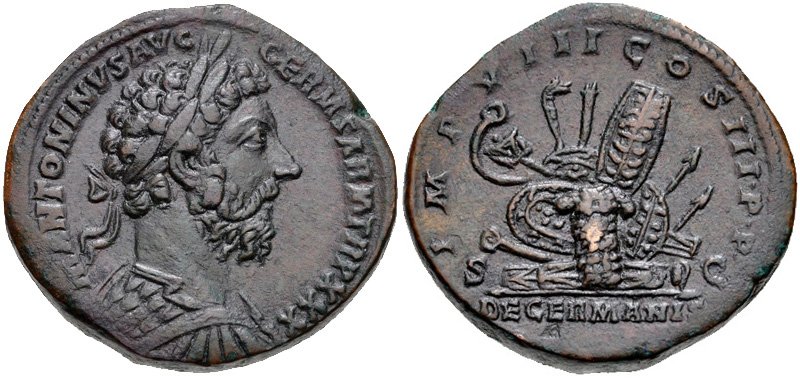
Roman Bronze Coins: From As to Follis — The Everyday Currency of the Empire
Gold and silver coins built the legend of Rome, but bronze coins were used for daily life.
From humble merchants to legionary soldiers, everyday transactions depended on bronze coins — the as, dupondius, sestertius, and later the follis.
These weren’t coins for senators or generals; they were coins for bakers, craftsmen, and farmers.
Each carried the emperor’s face into the hands of millions — a quiet propaganda machine circulating in every market and tavern.
Today, collectors treasure these coins not for their rarity, but for their intimacy. To hold one is to touch the lives of ordinary Romans who shaped history coin by coin.
🏛️ The Origins of Roman Bronze Currency
The As – Foundation of Roman Coinage
The as was the first standardized Roman coin, introduced in the early Republic around 280 BC.
Originally made of heavy cast bronze (aes grave), it evolved into a lighter, struck coin under the Empire.
| Coin | Metal | Value | Weight | Period |
|---|---|---|---|---|
| As | Bronze | Base unit | 10–11 g | Republic – 3rd c. AD |
| Dupondius | Brass (orichalcum) | 2 asses | 12–14 g | 27 BC – 3rd c. AD |
| Sestertius | Brass | 4 asses | 22–28 g | 27 BC – 3rd c. AD |
| Follis | Bronze (with silver wash) | Variable | 7–12 g | 294–400 AD |
💬 Before gold and silver dazzled the elite, bronze kept Rome’s markets alive.
⚖️ The As and Dupondius – Money for the People
The as was the Roman equivalent of small change — enough to buy a loaf of bread, a cup of wine, or a day’s ration of olives.
The dupondius, worth twice as much, was made of golden-hued orichalcum, allowing easy distinction from the darker bronze as.
Common Obverses: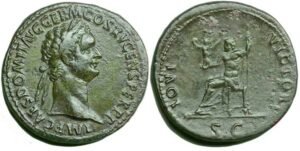
-
Bust of the reigning emperor or empress.
-
Radiate crown on the dupondius (a key feature to distinguish from the as).
Common Reverses:
-
Deities like Fortuna, Pax, or Concordia.
-
Military trophies, temples, or personifications of Rome.
🪙 The dupondius was Rome’s “two-dollar coin” — practical, pretty, and popular.
🪙 The Late Roman Follis – Bronze’s Revival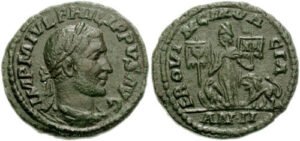
By the late 3rd century AD, inflation devastated silver coinage. To stabilize the economy, Emperor Diocletian introduced the follis around AD 294 — a large bronze coin with a thin silver wash.
| Era | Emperor | Description | Diameter | Metal |
|---|---|---|---|---|
| Diocletian (AD 284–305) | “GENIO POPVLI ROMANI” reverse | 28–30 mm | Bronze w/ silver wash | |
| Constantine the Great (AD 306–337) | Sol Invictus & Christian symbols | 20–25 mm | Bronze | |
| Constantinople Issues (4th c.) | Chi-Rho, wreaths, military themes | 18–22 mm | Bronze |
These coins bridged pagan and Christian Rome, carrying imperial authority across a changing world.
💬 The follis was not just a coin — it was the economic reboot of a crumbling empire.
🧩 Design, Iconography, and Propaganda
Roman bronze coins were powerful communication tools:
| Symbol | Meaning |
|---|---|
| S C | Senatus Consulto — “By decree of the Senate” |
| Victory with wreath | Military triumph |
| Temple or altar | Piety & divine approval |
| Cornucopia | Prosperity |
| Globe or standard | Global dominion |
Obverses often showed emperors as approachable figures — heads uncovered, unarmed — contrasting with the godlike imagery on gold and silver coins.
💬 Bronze coins made the emperor part of everyday life — a friendly face at the market stall.
💰 Roman Bronze Coin Values (2025 Collector Overview)
| Type | Condition | Common Emperors | Price Range (USD) | Notes |
|---|---|---|---|---|
| As | Fine – VF | Claudius, Trajan | $40 – $120 | Simple, historic |
| Dupondius | Fine – XF | Nero, Hadrian | $80 – $250 | Distinct yellow tone |
| Sestertius | VF – XF | Trajan, Marcus Aurelius | $300 – $2 500 | Large bronze masterpieces |
| Follis (Diocletian–Constantine) | Fine – VF | Diocletian, Constantine | $50 – $180 | Affordable and popular |
| Late AE3–AE4 (4th–5th c.) | Fine | Constantine sons, Theodosius | $10 – $60 | Entry-level coins for new collectors |
📈 Interest in late Roman bronze has surged due to affordability and rich iconography.
🔍 How to Identify Roman Bronze Coins
-
Color:
-
Bronze (reddish-brown) → As
-
Brass (yellow-gold tone) → Dupondius / Sestertius
-
-
Size:
-
As: 25–28 mm
-
Dupondius: 27–30 mm
-
Sestertius: 30–35 mm
-
Follis: 20–28 mm
-
-
Weight:
-
As/D upondius: 8–14 g
-
Follis: 7–12 g
-
-
Crown:
-
Radiate crown = Dupondius
-
Laureate head = As
-
-
Markings:
-
“S C” = early imperial Senate-authorized issue
-
“PLG / SMH / RIC” = late Roman mint marks (e.g., Lugdunum, Heraclea, Rome).
-
🧠 No two ancient bronze coins look alike — their beauty lies in their individuality.
🏦 Where to Buy Authentic Roman Bronze Coins
You can find Roman bronze coins for sale through trusted marketplaces and auction houses:
-
CNG (Classical Numismatic Group) – Wide range of affordable bronzes.
-
VCoins – Global verified sellers with return guarantees.
-
Leu Numismatik – Auction-quality examples.
-
MA-Shops – EU-based vendors with authenticity certificates.
-
NumisDon Marketplace – Educational bronze coin listings and collector insight features.
⚠️ Avoid “cleaned” bronze coins — natural patina preserves both authenticity and value.
🧠 Why Collectors Love Roman Bronze Coins
-
Affordable: Genuine history starting under $50.
-
Variety: Every emperor, empress, and deity imaginable.
-
Educational: Perfect for beginners learning coin iconography.
-
Durability: Bronze survives centuries with beauty intact.
💬 The bronze coin connects us to Rome’s pulse — not its palaces, but its people.
🔗 Internal NumisDon Connections
-
Roman Sestertius – The Bronze Giants of the Empire
-
Roman Denarius – Silver, Empire, and Power
-
Roman Aureus – The Gold of the Emperors
-
Top 25 Most Valuable Ancient Coins Ever Sold
💬 FAQs – Roman Bronze Coins
Q 1. What was the smallest Roman coin?
The quadrans — worth ¼ of an as, used for everyday purchases.
Q 2. Are bronze coins valuable?
Yes — artistic or well-preserved examples can sell for hundreds or even thousands of dollars.
Q 3. How can I tell if my bronze coin is real?
Check for weight, size, patina, and legends; avoid overly shiny surfaces.
Q 4. What is a follis coin?
A large bronze coin with a silver wash, introduced by Diocletian and used into the Byzantine period.
Q 5. Which is better to collect — silver or bronze coins?
Bronze is perfect for beginners: affordable, durable, and richly diverse.
🏺 Conclusion – Everyday Bronze, Eternal Legacy
The Roman bronze coins — from the early as to the late follis — may not shine like gold, but they reflect the truest face of Rome: the laborers, soldiers, and citizens who built an empire.
Their simplicity carries humanity; their endurance, greatness.
To collect them is to walk through Rome’s markets, hear its chatter, and feel its heartbeat in the palm of your hand.
💬 Bronze was Rome’s humblest metal — and its most enduring voice.
Author: Dr. Elena Voss – Numismatist & Roman Currency Historian