
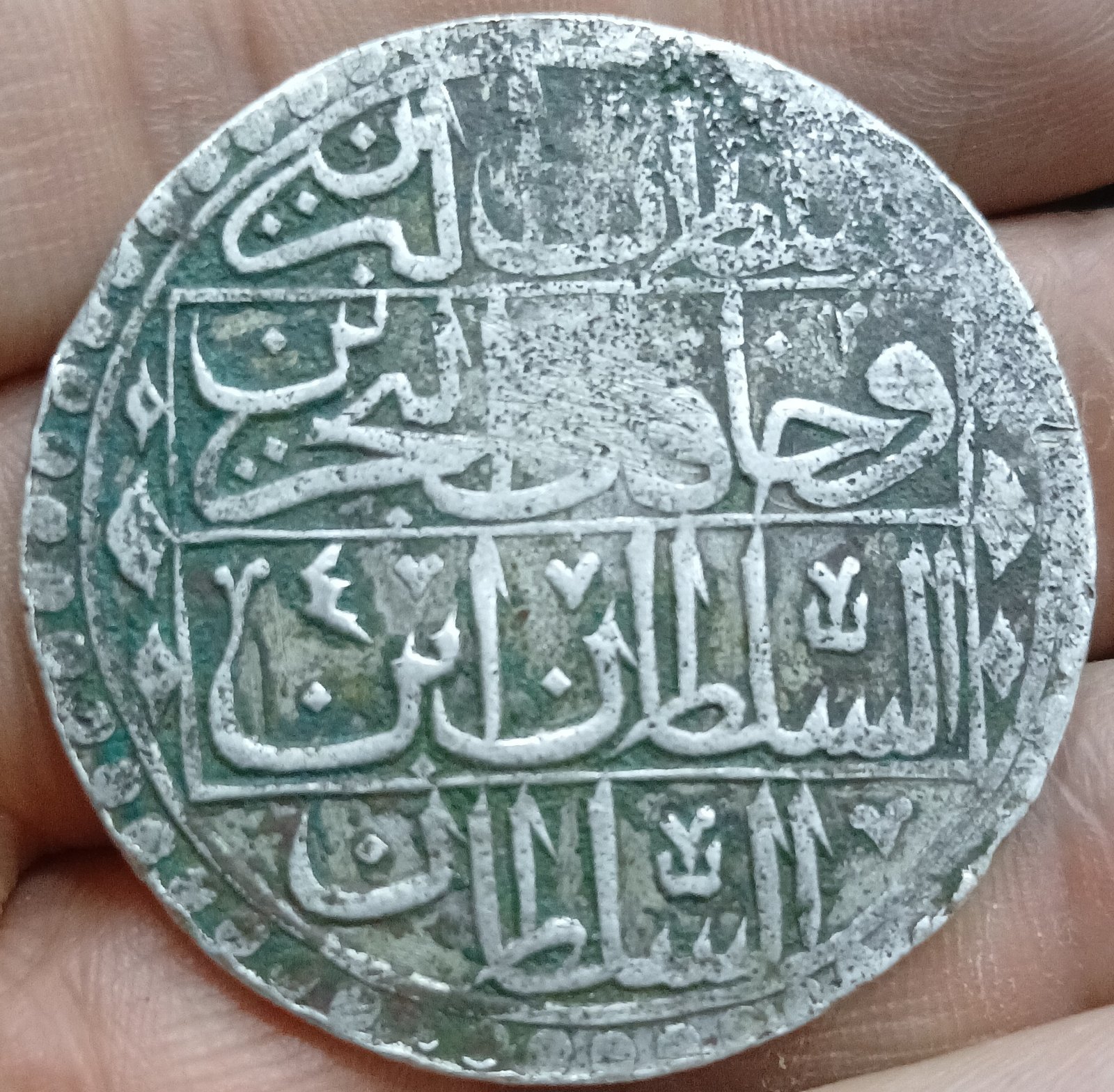
Ottoman Empire – Selim III
1 Yüzlük (1 Kuruş = 100 Para), AH 1203 / Year 3 (1791–1792)
Few Ottoman silver coins capture the grandeur, weight, and calligraphic power of the late 18th century as strongly as this 1 Yüzlük (1 Kuruş) struck under Selim III. This is not a small everyday akçe—it is a large, heavy, ceremonial-feeling silver piece, made at a moment when the Ottoman Empire was struggling, reforming, and redefining itself.
This particular example, weighing around 32 grams, represents the peak expression of Ottoman silver currency before the monetary system began to fragment in the 19th century.
Historical Context: A Coin from an Empire in Reform
Selim III ascended the throne in 1789, inheriting an empire under immense pressure—military defeats, economic strain, and the rising power of Europe. Unlike many predecessors, Selim III was a reformer, remembered for the Nizam-ı Cedid (“New Order”) reforms that attempted to modernize the army, administration, and state finances.
This 1 Yüzlük coin belongs to that reforming era. It was struck in AH 1203, with regnal year 3, corresponding to 1791–1792 CE, a time when Selim III was still consolidating power and pushing ambitious modernization programs.
Holding this coin is holding Ottoman reform in silver.
Denomination Explained: What Is a Yüzlük?
-
1 Yüzlük = 1 Kuruş = 100 Para
-
A high-value silver coin, not everyday pocket change
-
Used in larger transactions, state payments, military finance, and commerce
By the late 18th century, the kuruş had replaced older systems and became the backbone of Ottoman monetary circulation. Large silver coins like this were meant to inspire confidence—both domestically and internationally.
Obverse: The Tughra of Power
The obverse is dominated by the tughra of Selim III, an elaborate imperial calligraphic monogram combining:
-
The Sultan’s name
-
His title
-
A symbolic invocation of authority and legitimacy
This is not just decoration. The tughra functioned as a state seal, asserting that the coin’s value was guaranteed by the Sultan himself.
Visual Highlights
-
Deeply engraved calligraphy
-
Balanced, symmetrical layout
-
Confident, bold strokes characteristic of Selim III’s issues
Even with circulation wear, the tughra remains commanding and legible, a testament to the quality of the original strike.
Reverse: Denomination, Date, and Order
The reverse is organized into rectangular panels, a classic Ottoman layout:
-
Denomination clearly expressed
-
Mint formula and Islamic date
-
Regnal year “3”, indicating the third year of Selim III’s reign
This structured design reflects the Ottoman emphasis on clarity and hierarchy, even within complex Arabic script.
Metal, Weight, and Fabric
-
Metal: Silver
-
Weight: ~32 grams (exceptionally heavy for Ottoman silver)
-
Diameter: approx. 40 mm
-
Standard: KM 507
The weight alone places this coin among the largest Ottoman silver issues of its era. When struck, it would have felt substantial—intentionally so—reinforcing trust in the currency.
Artistry & Calligraphy
Ottoman coins are often misunderstood by collectors unfamiliar with Arabic script. In reality, this coin is a masterpiece of Islamic calligraphy:
-
Harmonized text blocks
-
Elegant letter extensions
-
Rhythmic spacing across the flan
Unlike European portrait coins, Ottoman silver communicates power through script and symmetry, not faces.
Condition & Eye Appeal
This specimen shows:
-
Honest circulation wear
-
Strong remaining detail
-
Natural silver toning
-
Clear legends and structure
For a coin that circulated over 230 years ago, the visual presence remains impressive. Large Ottoman silver coins rarely survive without issues—this example still commands attention in hand.
Collector Significance
Why collectors seek this coin:
✔ Large, impressive silver format
✔ Issued by a historically important reformist Sultan
✔ Clear date and regnal year
✔ Classic late-Ottoman calligraphy
✔ Strong representation of the kuruş system
This is the kind of Ottoman coin that works equally well in:
-
A serious Ottoman collection
-
A world silver crown-sized set
-
A reform-era historical cabinet
Market Perspective
While Ottoman silver prices fluctuate with condition and weight, large Yüzlük coins of Selim III are consistently desirable. Well-struck examples with readable legends and attractive toning often outperform smaller denominations.
Coins like this are no longer just “Ottoman coins”—they are recognized world historical artifacts.
Final Thoughts
This 1 Yüzlük of Selim III is not merely a coin—it is a statement piece. Heavy, elegant, and historically charged, it represents the Ottoman Empire at a crossroads: still powerful, still confident, yet already facing the challenges of a changing world.
For collectors who appreciate history written in silver and calligraphy, this coin belongs among the finest late Ottoman issues.