
Roman Coin Mint Marks Guide (With Real Examples)
Learn how to read Roman coin mint marks and to identify step by step. Discover what mint marks mean, where to find them, and how they help date Roman coins accurately.
If you’ve ever flipped a Roman coin over and noticed tiny letters at the bottom, you’ve already seen something powerful.
That small group of letters?
It tells you where the coin was made.
And once you understand Roman mint marks, identification becomes dramatically easier.
Let’s break it down in a simple, collector-friendly way.
What Is a Roman Mint Mark?
A mint mark is a set of letters—usually found at the bottom of the reverse side—indicating the mint city where the coin was struck.
It is located in a section called the exergue (the space below the main design).
On late Roman coins especially, mint marks are extremely important.
They help you:
-
Identify the city of production
-
Narrow down date ranges
-
Confirm authenticity
-
Differentiate similar coin types
Where to Look on the Coin
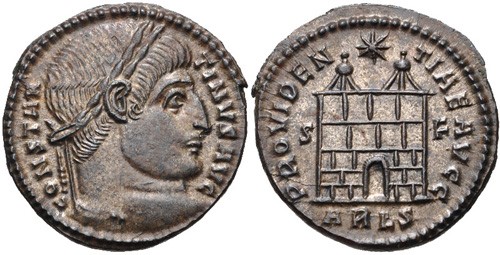
Turn the coin over.
Look at the very bottom of the reverse, below the design (soldiers, Victory, emperor, etc.).
You will usually see:
-
2–5 letters
-
Sometimes dots or symbols
-
Occasionally stars or wreaths nearby
That’s your mint mark.
The Meaning Behind “SM”
Many late Roman mint marks begin with:
SM
This stands for:
Sacra Moneta (Sacred Mint)

After SM comes an abbreviation of the mint city.
For example:
SMTS
SMANT
SMROM
Now let’s decode some real examples.
Common Roman Mint Marks and Their Cities
ROM → Rome
Obvious and common.
If you see ROM, the coin was struck in the city of Rome.
CON → Constantinople
Refers to the capital founded by:
Constantine I
Very common on 4th-century coins.
ANT → Antioch
Major eastern mint.
Often appears as:
-
ANT
-
SMANT
TR → Trier
An important mint in modern-day Germany.
Often appears as:
-
TR
-
PTR
-
STR
TS → Thessalonica
Appears as:
-
SMTS
-
TS
LON → London
Appears during the reign of:
Constantine I
London mint was active briefly.
How Mint Marks Help Date Coins
Different mints were active at different times.
For example:
If you have:
-
Emperor: Constantius II
-
Reverse: FEL TEMP REPARATIO
-
Mint mark: SMTS
You now know:
-
Coin is 4th century
-
Struck in Thessalonica
-
Likely AD 348–361
Mint marks narrow down possibilities significantly.
Mint Mark Structure (Advanced But Simple)
Many late Roman mint marks follow this structure:
SM + Mint Abbreviation + Officina Letter
Example:
SMTSΔ
Breakdown:
SM → Sacred Mint
TS → Thessalonica
Δ → Fourth workshop (officina)
Officina letters are often:
-
A (1st workshop)
-
B (2nd)
-
Γ (3rd)
-
Δ (4th)
This tells you which internal workshop struck the coin.
Yes, it gets that precise.
What About Earlier Roman Coins?
Early Imperial coins (1st–3rd century) often:
-
Do not show mint marks
-
Were primarily struck in Rome
-
Require stylistic analysis
Mint marks become consistent mainly from the 3rd century onward, especially after the reforms of:
Diocletian
His monetary reforms standardized mint identification.
Why Mint Marks Matter for Authenticity
Fake coins often:
-
Use incorrect mint mark combinations
-
Combine emperor + mint that never existed together
-
Have fantasy mint marks
If your coin shows:
-
Emperor from 2nd century
-
But mint mark style from 4th century
That’s a red flag.
Mint marks protect you from mistakes.
Common Beginner Mistakes
❌ Ignoring small letters at the bottom
❌ Confusing mint mark with reverse legend
❌ Misreading officina letters
❌ Assuming mint mark equals rarity
Remember:
Mint mark = location, not automatically value.
Are Some Mints More Valuable?
Sometimes yes.
Coins from:
-
London
-
Alexandria
-
Certain short-lived mints
Can command higher prices due to lower survival rates.
But condition still matters more.
Step-by-Step Roman Mint Mark Identification Checklist
1️⃣ Turn coin to reverse
2️⃣ Look at exergue (bottom section)
3️⃣ Identify first 2–3 letters
4️⃣ Check if it begins with SM
5️⃣ Match abbreviation to mint city
6️⃣ Check officina letter (if present)
7️⃣ Cross-reference emperor reign
Do this consistently, and mint marks become easy.
Real-World Example
Let’s say your coin shows:
DN VALENS PF AVG
Reverse: SECVRITAS REIPVBLICAE
Mint mark: CON
You now know:
-
Emperor: Valens
-
Mint: Constantinople
-
Date: AD 364–378
That’s full identification power from a few letters.
Final Thoughts
Roman mint marks are not random.
They are a structured system created to control quality and distribution across the empire.
Once you understand them, you move from guessing… to confidently identifying.
And that’s when Roman coin collecting becomes truly rewarding.
Internal Links To Add on NumisDon:
-
Roman Coin Legends Explained
-
How to Identify Late Roman Bronze Coins
-
How to Tell If a Roman Coin Is Real
-
Roman Coin Abbreviations List