
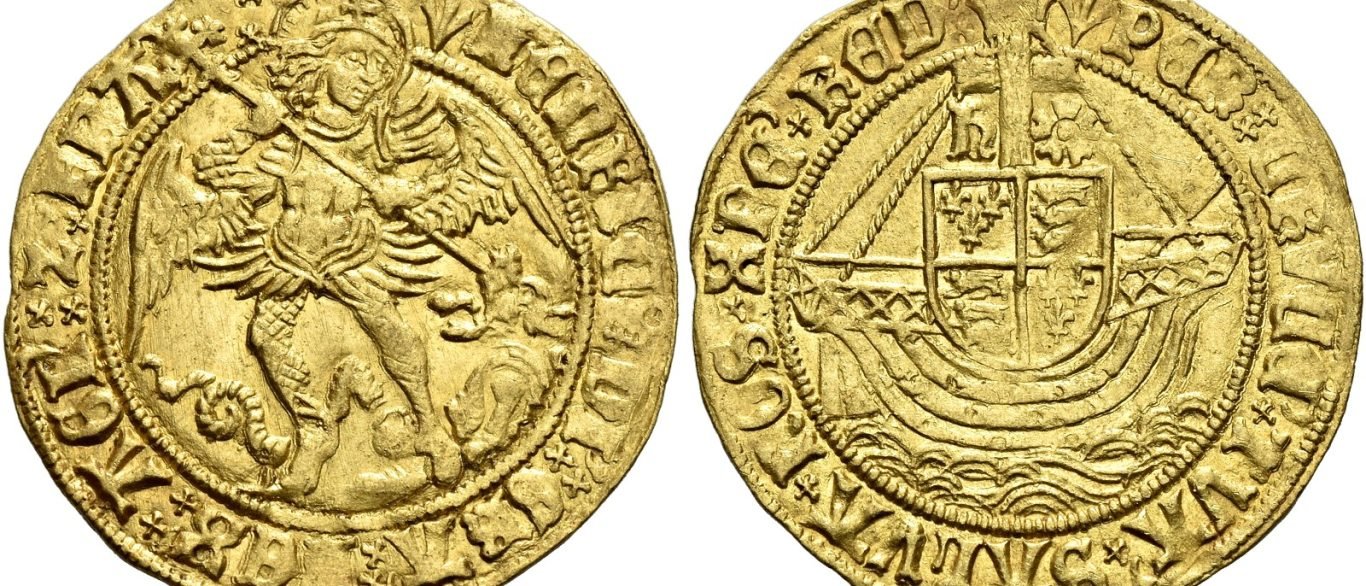
Henry VII Gold Coins
Power, Propaganda, and the Birth of the Tudor Dynasty (1485–1509)
When Henry VII took the English throne after the Battle of Bosworth in 1485, he didn’t just win a crown — he inherited a kingdom exhausted by civil war and desperate for stability. One of his smartest tools for restoring authority wasn’t an army or a law book, but gold coinage.
Henry VII’s gold coins were carefully designed messages in metal: legitimacy, divine favor, wealth, and dynastic strength. Today, they are among the most historically important and collectible medieval English gold coins.
Why Henry VII Gold Coins Matter to Collectors
Henry VII’s reign marks a turning point in English numismatics:
- End of the Wars of the Roses
- Beginning of the Tudor dynasty
- Revival of high-quality gold coinage
- Introduction of iconic designs that influenced English coins for generations
Unlike earlier medieval issues, Henry VII’s gold coins were political statements as much as currency.
Main Gold Coins of Henry VII
1. Gold Angel (AV Angel)
The Angel is Henry VII’s most famous gold coin — and one of the most symbolic coins in English history.
Design
- Obverse: Archangel Michael slaying the dragon
- Reverse: Royal ship bearing a shield of arms, sailing on waves
This wasn’t accidental imagery. Henry VII wanted to be seen as:
- God’s chosen king (St. Michael)
- Protector of England (dragon slain)
- Master of the seas and trade (ship motif)
Minted at
- Tower Mint, London (primary)
- Some later issues possibly at Bristol
Weight
- c. 5.0–5.2 grams
- Gold fineness approx. .995
Collector Appeal
- Most common Henry VII gold coin, but still scarce in high grade
- Heavily counterfeited in the period — a major reason survivors are rare today
2. Gold Sovereign
The sovereign was not meant for everyday use. It was a statement coin, used for gifts, diplomacy, and royal prestige.
Design
- Obverse: Henry VII enthroned in majesty
- Reverse: Large Tudor shield within a double rose
This is one of the first English coins to strongly emphasize royal portraiture — a move toward Renaissance-style kingship.
Minted at
- Tower Mint, London
Weight
- Approx. 15.55 grams
- Gold fineness c. .995
Rarity
- Extremely rare
- Often found in museum collections rather than private hands
3. Gold Ryal (Rose Noble)
Sometimes called the “Rose Ryal”, this coin continued a medieval tradition but with Tudor symbolism.
Design
- Obverse: King standing in a ship
- Reverse: Long cross with rose and sun symbols
Weight
- c. 7.6 grams
Importance
- Transitional coin between medieval and early modern England
- Popular with collectors who love naval imagery
Where Were Henry VII Gold Coins Minted?
Most authentic Henry VII gold coins come from:
- Tower Mint (London) – primary and most reliable
- Bristol – limited and rarer output
- York – extremely rare gold issues (mostly silver production)
Coins from non-London mints are especially prized due to lower output and survival rates.
The Rarest Henry VII Gold Coins
Here’s where the real excitement begins for advanced collectors:
🔥 Ultra-Rare Highlights
- Early Angel Types (Type I–II) — often crudely struck, very scarce
- Sovereigns in mint condition — museum-level rarity
- Mint-marked variants (cross-crosslet, rose, or lis)
- High-grade Angels with full legends — extremely difficult to find
Many Henry VII gold coins were:
- Melted under later Tudors
- Exported for trade
- Clipped or adjusted for weight
That’s why fully round, well-struck examples command massive premiums.
Legends That Tell a Story
Henry VII used Latin legends to reinforce authority:
- “HENRIC DI GRA REX ANGLIE ET FRANC”
Henry, by the Grace of God, King of England and France
CREATOR: gd-jpeg v1.0 (using IJG JPEG v62), quality = 82? 
CREATOR: gd-jpeg v1.0 (using IJG JPEG v62), quality = 82?
The continued claim to France wasn’t symbolic — it was political propaganda, reinforcing England’s historic ambitions.
Values & Market Demand (Collector Insight)
Prices fluctuate by condition and type, but as a general guide:
- Gold Angel (VF–EF): €6,000 – €20,000+
- Gold Angel (High EF): €25,000+
- Gold Sovereign: €80,000 – €300,000+
- Exceptional Provenance Coins: Often six figures
Coins with:
- Old collection provenance
- British Museum / ex-royal cabinet style history
- Early auction appearances
…are aggressively pursued by elite collectors.
Why Henry VII Gold Coins Are Never “Boring”
What keeps collectors hooked isn’t just gold content:
- ⚔️ A king who won his crown on the battlefield
- 👑 The birth of the Tudor dynasty
- 🐉 Religious symbolism and royal propaganda
- 🚢 Naval imagery before England became a sea power
- 🔍 Endless varieties, mint marks, and legend styles
Every Henry VII gold coin is a political document struck in gold.
If you hold a Henry VII gold coin, you’re holding:
- The end of medieval England
- The beginning of modern monarchy
- And the first chapter of the Tudor legend
These coins don’t just belong in collections — they belong in history books.
I. Henry VII Angel Types I–V — Visual & Diagnostic Breakdown
The Angel was struck throughout the reign of , but not all Angels are equal. Subtle changes in legend, style, lettering, and mint marks define five main types.
🔹 Type I (1485–1487) — The Victory Issue
Historical context: Immediately after Bosworth
Visual cues:
- Crude, Gothic-style lettering
- Archangel Michael appears stiff, narrow, almost medieval
- Short legends, uneven spacing
- Often softly struck
Collector note:
👉 Extremely scarce. Often clipped or weakly struck. These are the closest “battlefield” coins England ever produced.
🔹 Type II (c. 1487–1492) — Stabilization Phase
Visual cues:
- More confident engraving
- Michael’s wings broader
- Dragon more detailed
- Legends longer and more evenly spaced
Collector note:
👉 Still rare. Transitional type — many collectors miss it without careful legend study.
🔹 Type III (c. 1492–1496) — Mature Tudor Design
Visual cues:
- Cleaner ship lines on reverse
- Shield better centered
- Beaded inner circles more regular
- Balanced legends
Collector note:
👉 Scarce but obtainable. Often chosen by collectors wanting an early Tudor Angel with strong eye appeal.
🔹 Type IV (c. 1496–1504) — High Output Period
Visual cues:
- Strong strike quality
- Larger, more expressive St. Michael
- Crisp waves beneath ship
- Consistent lettering
Collector note:
👉 Most encountered type on the market. Still rare in EF, but the “classic” Henry VII Angel.
🔹 Type V (c. 1504–1509) — Late Tudor Refinement
Visual cues:
- Rounded, Renaissance-style figures
- Clear, elegant legends
- Strong relief on wings and dragon
- Full, round flans more common
Collector note:
👉 Most visually attractive. Often confused with early Henry VIII Angels — legend reading is critical.
II. Collector Identification Checklist (Beginner → Advanced)
Use this checklist every time you examine a Tudor Angel.
🧭 Step 1 — Read the Legend
Look for:
- HENRIC DI GRA REX ANGLIE ET FRANC
- Abbreviations vary by type
- Blundered legends = ⚠️ possible contemporary forgery
⚖️ Step 2 — Check Weight & Metal
- Target weight: ~5.0–5.2 g
- Gold fineness: ~.995
- Underweight examples may be:
- Clipped
- Worn
- Period-adjusted
🖼️ Step 3 — Analyze the Design
Obverse (St. Michael):
- Wing shape
- Armor folds
- Dragon detail
Reverse (Ship):
- Hull depth
- Wave pattern
- Shield alignment
🔍 Step 4 — Identify the Type
| Feature | Early Types (I–II) | Later Types (IV–V) |
|---|---|---|
| Lettering | Gothic, uneven | Clean, rounded |
| Strike | Weak | Strong |
| Style | Medieval | Renaissance |
🧾 Step 5 — Provenance & Surface
- Tool marks? (⚠️)
- Filing near rim? (⚠️)
- Old collection ticket = 🔥 premium
- Cabinet toning on gold = excellent sign
III. Henry VII vs Henry VIII — Gold Coinage Evolution
👑 The Father vs the Son
| Feature | Henry VII | |
|---|---|---|
| Purpose | Legitimacy & stability | Power & empire |
| Style | Reserved, symbolic | Bold, aggressive |
| Portraits | Rare | Dominant |
| Gold Quality | Extremely pure | Later debasement |
| Coin Output | Limited | Massive |
🏰 Henry VII’s Philosophy
- Gold = authority
- Coins used sparingly
- Avoided inflation
- Preferred quality over quantity
Result:
👉 Coins are scarce, dignified, and historically pure.
⚔️ Henry VIII’s Revolution
- Massive coin output
- Heavy use of portraits
- Military funding via coinage
- Gold and silver debasement later in reign
Result:
👉 More available coins, but less intrinsic purity.
⚖️ Collector Verdict
- Henry VII gold = elite, conservative, historically “clean”
- Henry VIII gold = dramatic, political, more obtainable
Many advanced collectors start with Henry VIII — but end up chasing Henry VII.
Final Numismatic Insight
Henry VII Angels aren’t just coins — they are:
- Victory medals
- Religious propaganda
- Foundations of Tudor England
Once you learn to see the differences, you never look at an Angel the same way again.